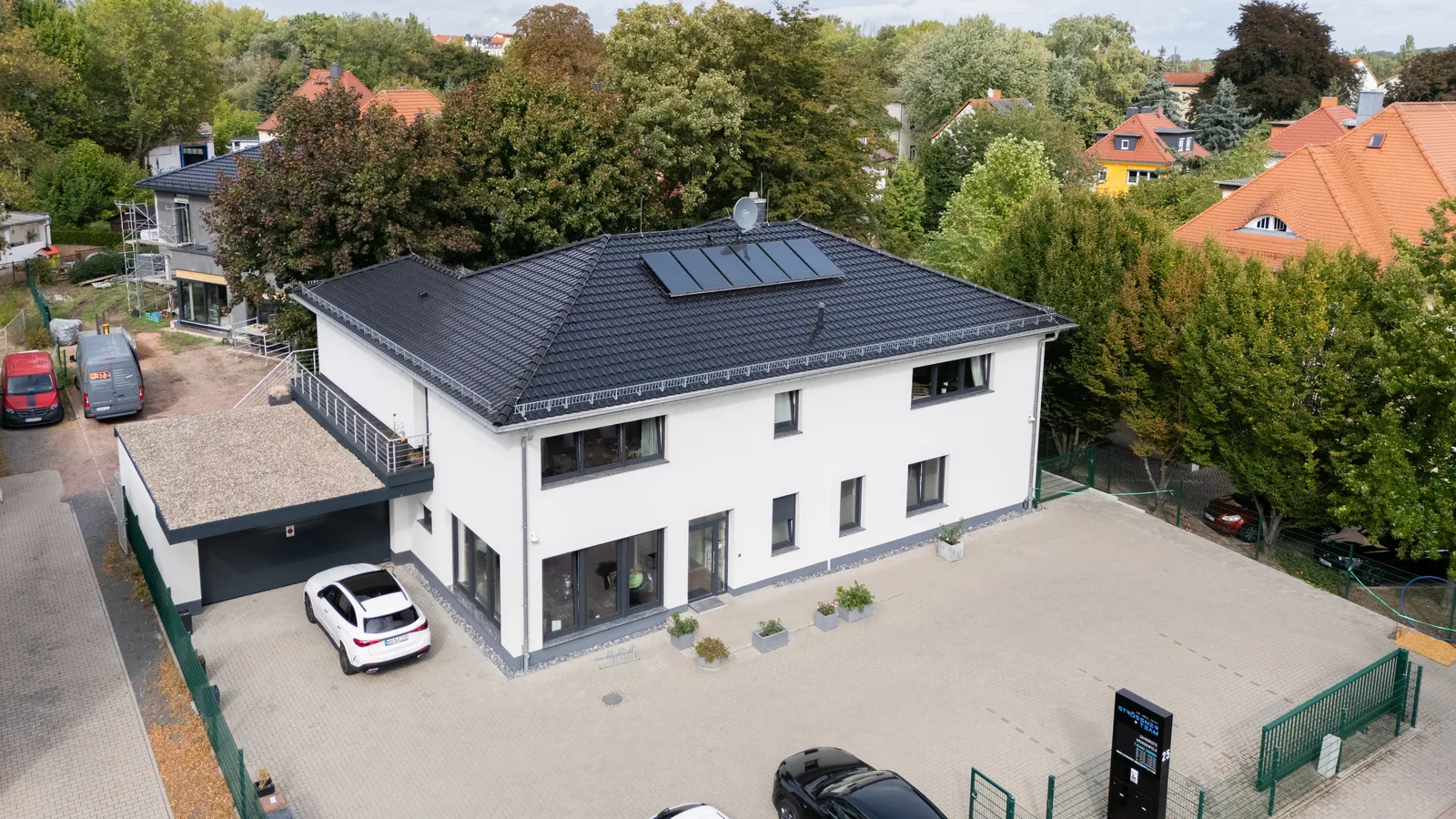
Zahnkompetenzzentrum Weißenfels · Weißenfels

Zahnkompetenzzentrum Weißenfels clinic-standard care

Dr. med. dent. M.Sc. Sandro Strößner
Zahnkompetenzzentrum Weißenfels · Weißenfels
51.2017° N · 11.9678° E
MMXXVI · Weißenfels

The essentials in 30 seconds

— Zahnkompetenzzentrum Weißenfels · Weißenfels

Who treats you

Dr. med. dent. M.Sc. Sandro Strößner – working in implantology since 2013 · M.Sc. in Oral Implantology and Periodontology – together with the team at Zahnkompetenzzentrum Weißenfels.

First Appointment

Conversation, medical history and examination (3D X-ray if needed) – planning comes first, treatment follows. A purely informational conversation without an examination is free of charge; examination and treatment and cost plan are billed according to the GOZ (the German scale of dental fees).

Costs

Before every treatment, you receive a written treatment and cost plan showing your own contribution; patients with statutory and private health insurance are treated equally.

First Step

Book an appointment around the clock via our online reception (the “Appointment” button), or by phone during opening hours on 03443 339 65 54.

01 — Professional Society
Member of the German Society for Implantology (DGI)
02 — Listing
Listed with the Leading Implant Centers
03 — Experience
Working in implantology since 2013 · M.Sc. Oral Implantology and Periodontology
04 — Patient Voices
★ 4.9 on Google · 216 reviews
Attitude
In its facilities, staff qualifications and processes, our Zahnkompetenzzentrum offers a standard of care close to that of a clinic, without losing the character of a personal dental practice.
— Zahnkompetenzzentrum Dr. Strößner
01
01 — Diagnostics

Understanding before we act.

Cone-beam CT scan, intraoral scans, structured assessment. The first appointment isn't treatment — it's a conversation backed by data.

Dentist wearing loupes examining a patient
Quiet · 3D Volume Tomograph 01 / 03
02 — Planning

Digitally planned, thought through backwards.

From the final dental prosthesis back to the surgery. What should exist at the end determines the first step — not the other way round.

A digitally captured jaw shown in CAD software on screen
Quiet · Backward Planning 02 / 03
03 — Execution

Minimally invasive, navigated.

Coordinated by one team under one roof. Surgery, prosthetics, laboratory — nothing handed off, nothing lost in translation.

Dental technician's work matching shade using a shade guide
Quiet · Surgical Still Life 03 / 03
01 — Diagnostics
The Principle

Our Focus Areas — Zahnkompetenzzentrum Weißenfels & More.

For patients, this means: a single point of contact, one consistent team, documented quality, and no loss of information between different facilities. And all of this within a personal, pleasant setting.

— scroll horizontally
Explained from everyday practice

Your questions — answered by us.

Short videos in which our team answers the questions we're asked most often. No jargon, no sales pressure.

The videos provide general information and do not replace individual advice or examination. The course and outcome of treatment depend on personal circumstances; medicine offers no guarantee of success. All videos have subtitles.

OVERVIEW

Clinic-standard equipment in a dental practice – what that means

Some types of treatment go beyond what an average dental practice can straightforwardly provide: extensive implant treatment, the complete restoration of an entire set of teeth in a single day, larger surgical procedures on the jawbone, or treating people who want or need their care under sedation or general anaesthesia only. It is precisely for these situations that the Zahnkompetenzzentrum Dr. Strößner in Weißenfels has built up equipment, facilities, and workflows that come close to the standards of an inpatient-style facility – without you having to go to a hospital for this.

The term "clinic-standard equipment" describes very precisely what this is about: we are a dental practice. We remain a dental practice. But we have equipment, hygiene processes and a dedicated procedure area of a kind more usually associated with a clinical setting. This allows us to offer treatments that, elsewhere, are often referred to a specialised facility – and to do so in the familiar, personal atmosphere of a practice, where you do not become just a case number.

A practice with clinical-grade equipment – not a “clinic”

It is important to us to be precise here: the Zahnkompetenzzentrum Dr. Strößner is a dental practice with particularly comprehensive, clinic-standard facilities. We deliberately do not describe ourselves as a “clinic”, because that term is legally tied to inpatient facilities. What you will find with us is the combination of the technical standard of a surgery-capable environment with the closeness, continuity and personal accessibility of an owner-run practice.

For you as a patient, this means specifically: you are looked after by the same team from start to finish. Consultation, planning, the procedure and aftercare all come together under one roof. There is no anonymous change of ward, no changing practitioners, no feeling of getting lost in a large operation. Instead, there are fixed points of contact who know your case, your history and your wishes.

Who is this relevant for?

  • People with substantial treatment needs, who would like their care bundled into as few, well-planned appointments as possible.
  • Patients with pronounced treatment-related anxiety who would like treatment under sedation or general anaesthesia.
  • People with a strong gag reflex, physical limitations, or pre-existing conditions where close monitoring during treatment is advisable.
  • Anyone facing an extensive surgical procedure who values being treated in an environment with high technical and hygiene standards.
  • Working people and travellers, for whom outpatient treatment without a hospital stay is organisationally much simpler.

Whether clinic-standard care makes sense in your case cannot be said as a blanket rule – it depends on the findings, on your health, and on your personal preferences. This is exactly what we clarify in a detailed initial consultation, before any decision is made.

EQUIPMENT

The equipment in detail: cone-beam CT, procedure area and hygiene

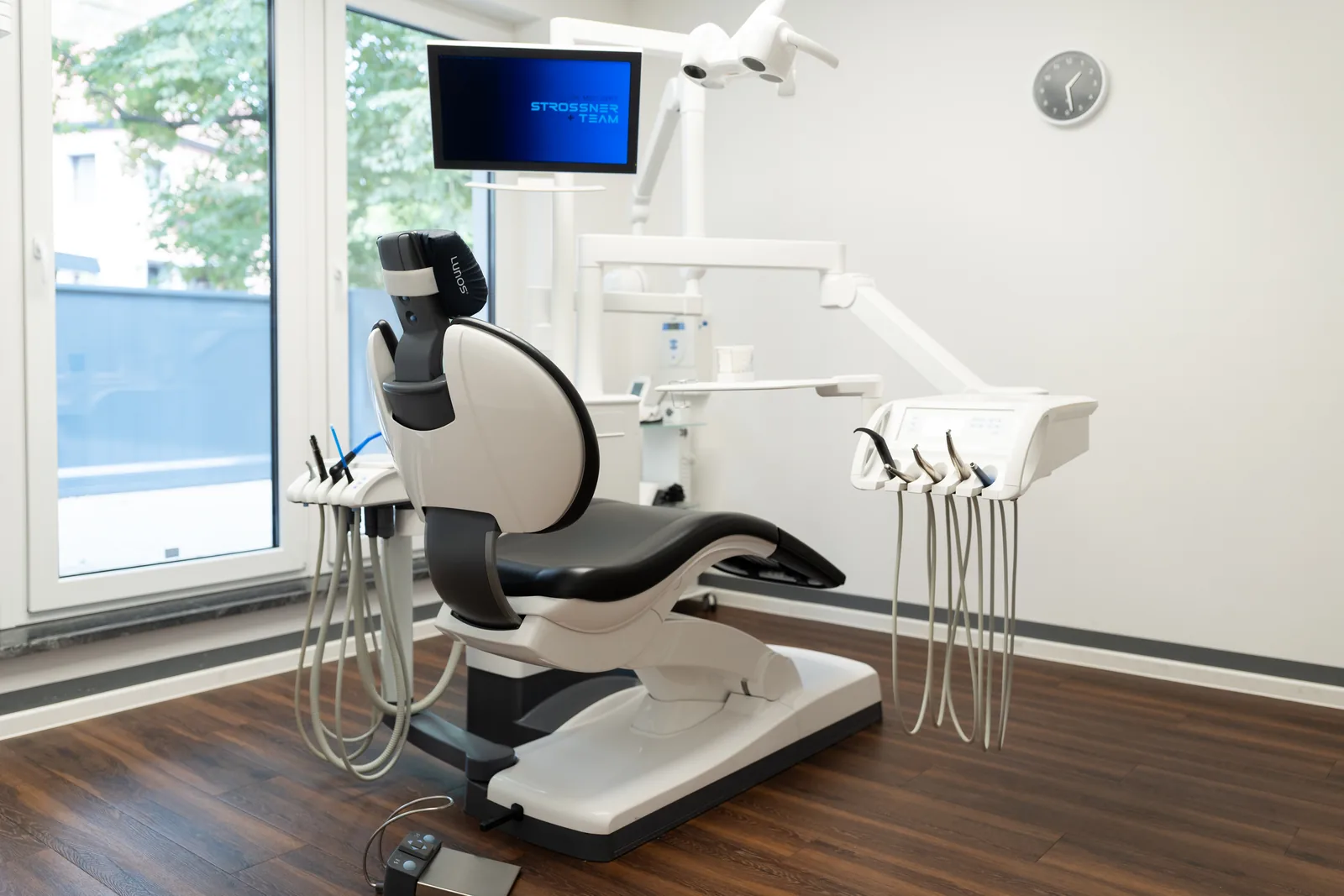
What makes clinic-standard care possible is, first and foremost, the equipment. Three areas are decisive here: three-dimensional diagnostics, our own procedure area, and a hygiene concept that meets even more demanding surgical requirements. All three interlock and allow us to carry out procedures safely, predictably and gently.

Three-Dimensional Diagnostics with Cone-Beam CT

3D X-ray (cone-beam CT) produces a three-dimensional image of the jaw and teeth. Unlike a conventional two-dimensional X-ray, it allows the course of nerves, the position of the maxillary sinuses, and the available bone volume to be assessed in three dimensions. This provides a valuable basis for planning implants, assessing impacted wisdom teeth, or evaluating complex anatomical conditions.

A cone-beam CT scan is not taken routinely at every appointment, but only when the diagnostic information it is expected to provide justifies the examination. Modern equipment works with imaging windows limited to the specific area concerned, so the examination can be carried out in a targeted way. We decide individually whether, and to what extent, a three-dimensional scan makes sense in your case, and discuss this with you.

Our own procedure area for larger surgical treatments

A separately equipped procedure area is available for more extensive surgical interventions. Its design and equipment are geared towards more demanding treatments – with space for a treatment team and, where necessary, an anaesthesia team, the necessary lighting, connections for monitoring equipment, and an instrument reprocessing pathway that meets the requirements of surgical procedures.

This area is separate from the general treatment rooms. This creates calm, clear workflows, and an environment fully focused on the particular procedure. Especially for longer treatments, such as a comprehensive restoration carried out in a single session, this makes a noticeable difference – for the team and for you.

Hygiene at a High Standard

In dental surgery, hygiene is not a minor detail but a basic requirement. Instrument reprocessing follows documented, traceable procedures. Sterilisation, packaging and storage are organised so that reprocessed, tested instruments are ready for every procedure. Surface disinfection, personal protective equipment and a well-thought-out room concept complement this approach.

  • Machine-based, validated reprocessing of instruments, with documentation of each processing step.
  • Separate pathways for unclean and reprocessed instruments, to avoid cross-contamination.
  • Packaging and storing sterile instruments right up until they are used.
  • Structured surface and hand hygiene following fixed protocols.
  • A procedure area whose cleaning and preparation are geared to surgical requirements.

These standards aren't visible when you sit down in the treatment chair – but they are the foundation that allows even larger procedures to be carried out responsibly in our practice.

PROCEDURES

Larger procedures and full-mouth rehabilitation – outpatient rather than inpatient

Perhaps the greatest practical advantage of clinic-standard practice facilities is the ability to carry out extensive treatments on an outpatient basis. “Outpatient” means: you come in for your appointment, are treated, and go home again the same day – without staying overnight in an inpatient facility. What often used to call for a hospital stay can, in many cases, now be handled in a well-equipped practice.

What counts as a larger procedure

More extensive treatments that require suitable facilities include, among others, the placement of multiple implants, bone augmentation procedures, the removal of several teeth or teeth in a difficult position, and combined procedures in which surgery and prosthetic restoration are coordinated with one another. Such treatments benefit from three-dimensional planning, a suitable procedure area and – depending on preference and findings – treatment under sedation or general anaesthesia.

Full-mouth rehabilitation – as much as possible in one session

In a full-mouth restoration, a set of teeth with extensive treatment needs is treated in one well-prepared course of treatment – or in a few closely spaced appointments – instead of attending separate appointments spread over many months. For people with substantial treatment needs, dental anxiety or little time, this can be a considerable relief. Whether a single-session restoration is possible and advisable in your case depends on the scope of treatment, the condition of your bone and teeth, and your general health.

A full-mouth restoration is, as a matter of principle, only planned after a thorough preliminary examination and a detailed consultation. It's not about getting as much done at once as possible, but about finding an approach that is medically justifiable and right for your situation.

Advantages of Outpatient Care

  • No overnight stay in an inpatient facility – you recover in your own familiar surroundings.
  • Continuous support from a familiar team, rather than changing practitioners.
  • Consultation, planning, the procedure and aftercare all come together in one place.
  • Appointments can often be fitted into everyday life and work more easily.
  • A personal, calm atmosphere instead of the anonymous bustle of a large institution.
  • Short paths and direct access to your points of contact for questions after the procedure.

Outpatient care is not the right choice for everyone or every situation. In the case of certain pre-existing conditions, very extensive procedures, or where particular monitoring is required, inpatient treatment can be the better path. We discuss openly with you what makes sense in your case – and refer you elsewhere where this is warranted.

NARKOSE

Treatment under sedation or general anaesthesia with an anaesthesia team

For many people, the thought of extensive dental treatment is associated with tension or fear. Others have a pronounced gag reflex, physical limitations, or simply the wish to be aware of as little of the treatment as possible. For all of these situations, our clinic-standard facilities make it possible to treat under sedation or general anaesthesia – supported by our own anaesthesia team.

Sedation – relaxed, but responsive

During sedation, you are brought into a state of deep relaxation. You usually remain responsive, but experience the treatment in a muted, detached way; many people remember very little of it afterwards. Sedation can be a good option if you would like noticeable calming without needing full general anaesthesia. Which form is suitable for you is clarified in the preliminary consultation.

General Anaesthesia – Treatment While Asleep

With general anaesthesia, you are asleep throughout the entire treatment. It is administered and monitored by an anaesthetist, while the dental team concentrates on the treatment itself. This division of responsibilities is a key safety aspect: the person responsible for the anaesthetic focuses exclusively on your vital functions, not on the dental treatment.

General anaesthesia is a medical procedure with its own requirements and risks. Before every anaesthetic, an anaesthesia consultation and preparation discussion takes place, in which your health, any medications you are taking and possible risks are recorded and discussed. Whether general anaesthesia is suitable for you is decided by the anaesthesia team – not every treatment requires or permits general anaesthesia.

The Anaesthesia Team

The general anaesthesia or sedation is the responsibility of qualified anaesthesia staff experienced in caring for patients during outpatient procedures. They bring the necessary experience and equipment to monitor your vital functions throughout the procedure and to intervene if needed. This interplay between the dental and anaesthesia teams is the reason why treatments that used to almost inevitably require a hospital stay are now possible in a suitably equipped practice.

Advice Before and After General Anaesthesia

  • Before general anaesthesia, you generally need to arrive having fasted – you'll receive the exact instructions in good time beforehand.
  • After sedation or general anaesthesia, you must not drive yourself or take an active part in road traffic for the rest of the day.
  • Please arrange for someone to accompany you home, and ideally to stay with you for the rest of the day.
  • Plan for a quiet treatment day, and avoid important appointments or decisions.
  • Follow the individual guidance you receive for the period after the procedure.

SAFETY

Safety and Monitoring During the Procedure

The more extensive a procedure, and the deeper the sedation or anaesthesia, the more important continuous monitoring becomes. Safety does not come from a single piece of equipment, but from the interplay of preparation, monitoring, trained staff and clear emergency procedures. It is precisely this interplay that forms a core part of our clinic-standard facilities.

Preparation begins before the procedure

Before extensive treatment or general anaesthesia takes place, your health, any pre-existing conditions and your medications are recorded and assessed. This process is designed to identify possible risks early and tailor the treatment accordingly. In some cases, it may make sense to consult your GP beforehand or obtain additional findings.

Continuous Monitoring

During treatment under sedation or anaesthesia, your vital functions are continuously monitored. This typically includes measuring oxygen saturation, heart rate and blood pressure. This monitoring allows the anaesthesia team to notice changes early and respond in good time, so that the treatment remains controlled at every stage.

  • Continuous monitoring of oxygen saturation, pulse and blood pressure during the procedure.
  • A member of the anaesthesia team whose sole focus is your vital signs.
  • Equipment and medication to be prepared for unexpected situations.
  • Clear, well-practised procedures for situations where a quick response is needed.
  • A monitoring phase after the procedure, until you are sufficiently alert and stable.

Waking Up and Discharge

After sedation or a general anaesthetic, you are not left to your own devices. You remain under observation until you are sufficiently awake, your circulation is stable, and you are able to go home accompanied. Only then will you be discharged – together with clear guidance for the time that follows and the option of contacting us with any questions or concerns.

This care before, during and after the procedure is not an extra, but part of what makes up responsible outpatient treatment at a practice with clinic-standard facilities. Safety takes priority here – if a procedure does not appear responsible to carry out at our practice, we say so openly and look for the right path together with you.

ABLAUF

How comprehensive treatment works with us

Extensive treatment is not a spontaneous event, but a planned path involving several steps. Each step builds on the previous one and is designed to ensure that you know exactly what to expect, and that the treatment itself proceeds as calmly and safely as possible. The exact course depends on your findings – the following outline shows the typical framework.

  1. Initial consultation and assessment: We listen, record your symptoms, wishes and your general health, and form an initial overview of what treatment might be needed.
  2. Diagnostics: Where needed, and weighed up individually, we take two- or three-dimensional images so that we can accurately assess the bone, nerves and anatomical conditions.
  3. Treatment planning: Based on the findings, we develop a proposal, discuss alternatives, and agree together on what will be treated, in what order, and to what extent.
  4. Explanation and cost plan: You receive a clear explanation of the benefits, risks and alternatives, along with a written treatment and cost plan, before anything gets under way.
  5. Preparing for anaesthesia (if planned): Before sedation or general anaesthesia, a separate anaesthesia consultation takes place, with its own explanation of the process.
  6. The procedure: Treatment takes place in the procedure area, if needed under the care of the anaesthesia team and with continuous monitoring.
  7. Waking up and monitoring: After sedation or general anaesthesia, you are monitored until you are stable and alert enough for the journey home with your companion.
  8. Aftercare: You receive guidance for at home, check-up appointments are arranged, and we remain available for questions.

What you can do yourself to help things go well

Comprehensive treatment works best as a joint effort. Bring a list of your medications and any known conditions to the initial consultation. Ask any questions on your mind – there is no such thing as an unimportant question when it comes to your body. Follow the instructions around anaesthesia and aftercare, and arrange a companion for the day of treatment in good time.

If you become unsure between steps, or if anything changes about your health, get in touch. Good planning depends on being adapted to your actual situation – and that only works if we know what's going on with each other.

COSTS & LOCATION

Costs, insurance and the route to Weißenfels

For extensive treatment, the question of cost is understandable and legitimate – and it deserves a clear, honest answer. However, flat-rate prices cannot be given responsibly, because the scope, effort and chosen form of restoration vary considerably from case to case. What we can assure you of is transparency: before treatment begins, you will receive a written plan that breaks down the costs you can expect.

Patients with Statutory and Private Insurance

Some dental services form part of standard care under statutory health insurance; others – such as certain forms of implant treatment, higher-value dental prosthetics, or treatment under general anaesthesia – must be paid for privately, in whole or in part. Whether, and to what extent, your health insurer contributes depends on the specific treatment and your individual circumstances. We explain to you which parts are likely to be covered by your insurer and which are not.

Considering anaesthesia costs separately

The costs of sedation or general anaesthesia should be seen separately from the actual dental services. Cost coverage by statutory health insurance is only possible under certain medical conditions – for example, if treatment can be demonstrated to be otherwise not feasible. We clarify in advance whether this applies in your case, so that you are not caught out by unexpected costs.

Reliable statements about your costs are only possible after an examination. Before any extensive treatment, you receive a written treatment and cost plan, which you can review at your own pace and, if you wish, submit to your health insurer to clarify reimbursement. We only begin treatment once you have given your consent. On request, we also discuss the option of instalment payment. For a no-obligation initial conversation, you can reach the Zahnkompetenzzentrum Dr. Strößner in Weißenfels on 03443 339 65 54.

Weißenfels Location

The Zahnkompetenzzentrum Dr. Strößner is located at Leopold-Kell-Straße 25, 06667 Weißenfels, in the Burgenlandkreis. Its location in Saxony-Anhalt makes the practice easy to reach not only for Weißenfels itself, but also for the surrounding area – our clinic-standard facilities spare many patients long journeys to specialised facilities in larger cities.

Precisely because extensive procedures and treatment under general anaesthesia require careful organisation, it is worth calling in advance: we take the time to understand your situation, clarify the most important questions over the phone, and arrange an appointment for a detailed initial consultation. If you need to be picked up after a procedure, the short distances in manageable Weißenfels are an additional help.

Portrait Dr. med. dent. M.Sc. Sandro Strößner
Dr. med. dent. M.Sc. Sandro Strößner

Clinic-standard equipment at Dr. Strößner dental practice

In terms of equipment, staff qualifications and processes, our Zahnkompetenzzentrum offers a standard of care close to that of a clinic, without losing the character of a personal dental practice. We have our own procedure room with anaesthesia capability, a cooperating specialist in anaesthesia, digital 3D diagnostics, and a master dental laboratory directly attached.

This combination allows us to carry out demanding treatments on an outpatient basis: full-mouth restorations under general anaesthesia, All-on-4 with immediate provision, complex bone augmentation and jaw surgery. You receive high-quality dental care in the familiar atmosphere of our practice.

Dr. med. dent. M.Sc. Sandro Strößner — Weißenfels, MMXXIII
— Practice Video · 02:14 Weißenfels / Sachsen-Anhalt
00:00
02:14

Voices that have stayed.

— Excerpts from patient conversations
01 — Voice

What convinced me was the absence of marketing. No promises. Just planning, explanation, execution. I had eight implants placed and didn't even feel like I'd made a difficult decision.

— A. H. · written patient feedback, held on file at the practice
02 — Voice

I was an anxious patient for fifty years. Today, I am no longer one. Not because my anxiety has disappeared, but because this team took it seriously, without ever making a drama out of it.

— K. M. · written patient feedback, held on file at the practice

Questions, answered calmly.

— Before your first appointment
No. We are a dental practice with particularly comprehensive, clinic-standard facilities. We deliberately avoid the term 'clinic', because it is legally tied to inpatient facilities. With us, you benefit from a high technical standard, while also enjoying the personal atmosphere of a practice.
This means that we have equipment, our own procedure area and hygiene processes of the kind more usually associated with a clinical setting. These include, among other things, three-dimensional diagnostics and the option of treatment under sedation or general anaesthesia – all on an outpatient basis, within a single practice.
In many cases, an extensive treatment can be combined into one well-prepared session, or a few closely scheduled appointments. Whether this is possible and sensible in your case depends on the findings and your health, and is thoroughly planned in advance.
With sedation, you are deeply relaxed but generally responsive, and you experience the treatment in a muted way. With general anaesthesia, you sleep through the entire procedure. Which form is suitable for you is something we clarify together with the anaesthesia team in the preliminary consultation.
The anaesthesia or sedation is overseen and monitored by qualified anaesthesiology staff, while the dental team focuses on your treatment. This division of tasks ensures that one person is solely responsible for your vital functions.
Every anaesthetic is a medical procedure with its own requirements and risks. Before an anaesthetic, a preliminary anaesthesiology discussion takes place, in which your health is assessed and possible risks are discussed. During the procedure, your vital functions are continuously monitored. Whether an anaesthetic is suitable for you is decided by the anaesthesia team.
In many cases, no. Thanks to our clinic-standard facilities, many extensive procedures can be carried out on an outpatient basis at our practice, meaning you can go home again the same day. For certain pre-existing conditions or very extensive procedures, however, inpatient treatment can be the better path – we discuss this openly with you.
After sedation or general anaesthesia, you must not drive yourself or actively take part in road traffic for the rest of the day. Please arrange for someone to accompany you, pick you up, and ideally stay with you for the rest of the day.
No. A three-dimensional scan is not taken routinely, but only when the diagnostic information justifies the examination – for example, for implant planning or in complex anatomical situations. Whether this makes sense in your case is something we decide individually and discuss with you.
It would not be credible to state flat-rate prices, as the scope and effort involved vary considerably from case to case. Before treatment begins, you receive a written treatment and cost plan that breaks down the costs you can expect. Anaesthesia costs are considered separately in this.
Cost coverage by statutory health insurance is only possible under certain medical conditions, for example, if treatment could not otherwise be carried out. We clarify in advance whether this applies in your case, so that you are not caught off guard by costs.
Around the clock via our online reception (the “Appointment” button), or by phone during opening hours on 03443 339 65 54.
The Zahnkompetenzzentrum Dr. Strößner is located at Leopold-Kell-Straße 25 in 06667 Weißenfels in the Burgenlandkreis. For a no-obligation initial conversation, you can reach us by phone on 03443 339 65 54 – we take the time to understand your situation and plan everything further.

Anonymous Self-Test · 2 Minutes

How great is your fear of the dentist?

Many people put off visiting the dentist for years because of anxiety — and you are not alone in this. This short self-test gives you an honest initial assessment and shows you which options could make your next visit noticeably easier.

  • 5 short questions, done in 2 minutes
  • Runs entirely on your device — no storage, no cookies, no tracking
  • Based on the scientific MDAS scale
A Beginning

One appointment. One conversation. And you'll notice the difference.

Book an appointment
Call
Appointment
Everything in one placeAppointments, questions, etc.